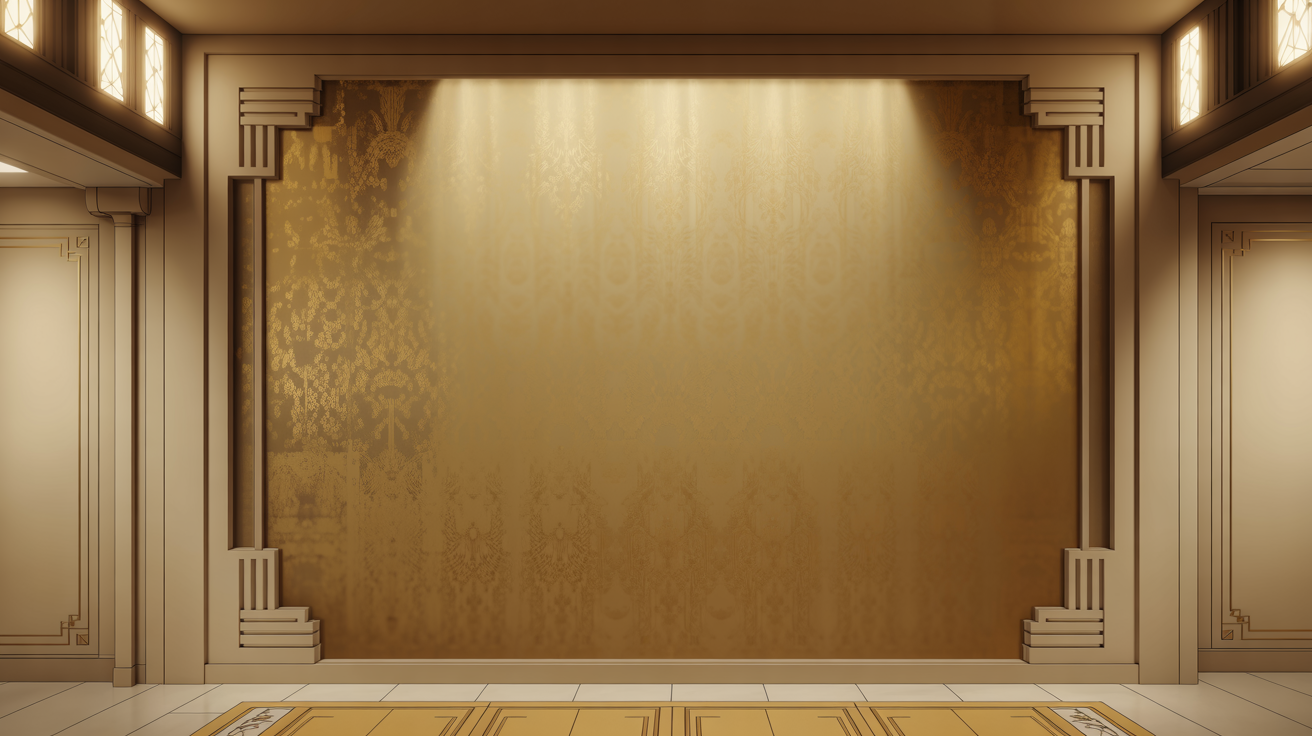


Even a monumental work can look dull in the wrong light — and come alive under the right one. The rules are few, and museums have tested them for a century.
Aim for neutral to slightly warm light, 3000 K to 4000 K. Cooler light (above 5000 K) turns an artwork clinical; very warm light (below 2700 K) tints the palette and swallows the shadow detail.
Place spotlights at roughly a 30-degree angle from the vertical. Steeper, and you get glare off the surface; shallower, and the frame or the panel's own depth casts shadows across the image. Thirty degrees is the museum's quiet compromise, and it works on a living-room wall exactly as it does in a gallery.
A dimmable system earns its money at dusk. Lowered light narrows the room and deepens the work's shadows — the same panel that was architecture by day becomes atmosphere by night. One work, two lives, controlled from a wall switch.
Join the Sanctuary to share your insights.
Access AccountThe level of detail in this documentation matches the precision of the artworks themselves. Truly a benchmark for digital art archiving.